

Second brain methods are becoming increasingly popular. Our brain is not designed to process the information overload of modern digital era. That’s why you need a second one!
In this blog post we will tell you about three popular second brain methods and some effective digital tools to make them work as your second brain. We will also show you which methods work for what and how you can choose what’s best for you.
Let’s see how you can digitally organize knowledge through three popular thought management systems: Zettelkasten, PARA, CODE.
Zettelkasten: The Art of Connected Thinking
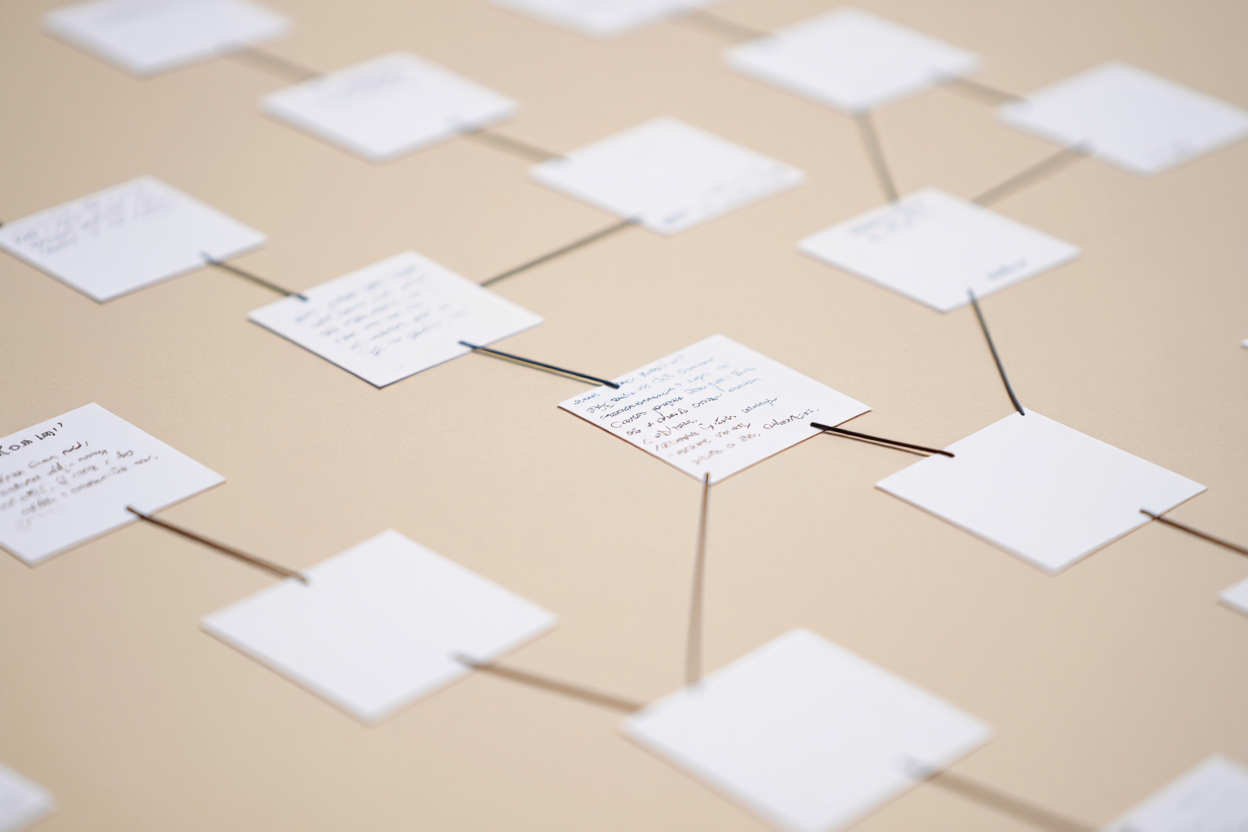
Zettelkasten is a German word that translates to “slip box” and was invented by the sociologist Niklas Luhmann.
Luhmann used a system of index cards in boxes to store his thoughts and linking them together, gradually building a web of information that were linked with tags and meaningful connections, not dissimilar to our own World Wide Web.
Core Principles:
Best Use Cases:
Strengths:
Weaknesses:
How to use Zettelkasten Method
Imagine you are a psychologist researching racial biases. You make a note about how people have an innate bias towards other people from the same group. In your reading, you come across relevant information and make a note about how innate racial biases can be overcome through education.
You then proceed to connect these two notes together because they have something in common and voila!
This new connection sparks a new idea for how we can teach our children that those people who are different from us are not our enemies.
The beauty of Zettelkasten is in making these links and how they can spark new ideas. Gradually you can build a network of ideas that are link together and draw novel insights from them.
If you want to learn more then checkout the Zettelkasten Method’s website and read all about it.
If note taking and organic growth is not your jam then let’s move to something more structured.
PARA Method: Organizing Life with Projects, Areas, Resources, and Archives
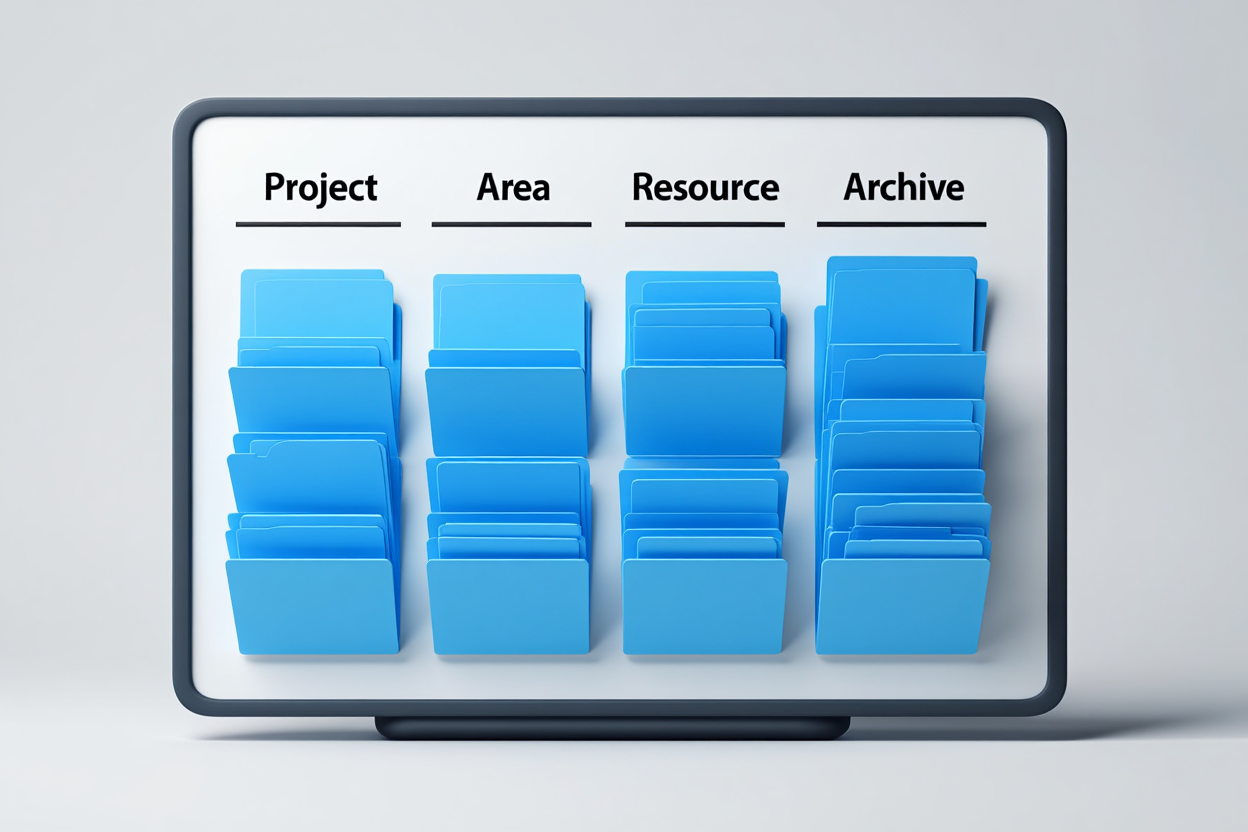
Tiago Forte developed the PARA method (stands for Projects, Areas, Resources, and Archives) as part of his Building a Second Brain system, aiming for a straightforward way for organizing your digital life.
Structure:
Benefits:
Best Use Cases:
Strengths:
Weaknesses:
How to use the PARA Method
Create four folders for each of the elements of PARA and ask yourself these four questions:
If the answer to one of them was yes, then put that into the relevant folder.
Tools such as Notion, Obsidian, and Evernote can help you categorize your information and have easy access to it.
The good thing about PARA is that it is straightforward and helps you get your life and work organized, but it won’t necessarily inspire your creativity.
PARA by itself is not a complete method, and Tiago Forte has designed another framework to complement PARA, called CODE.
CODE Framework: Capture, Organize, Distill, Express
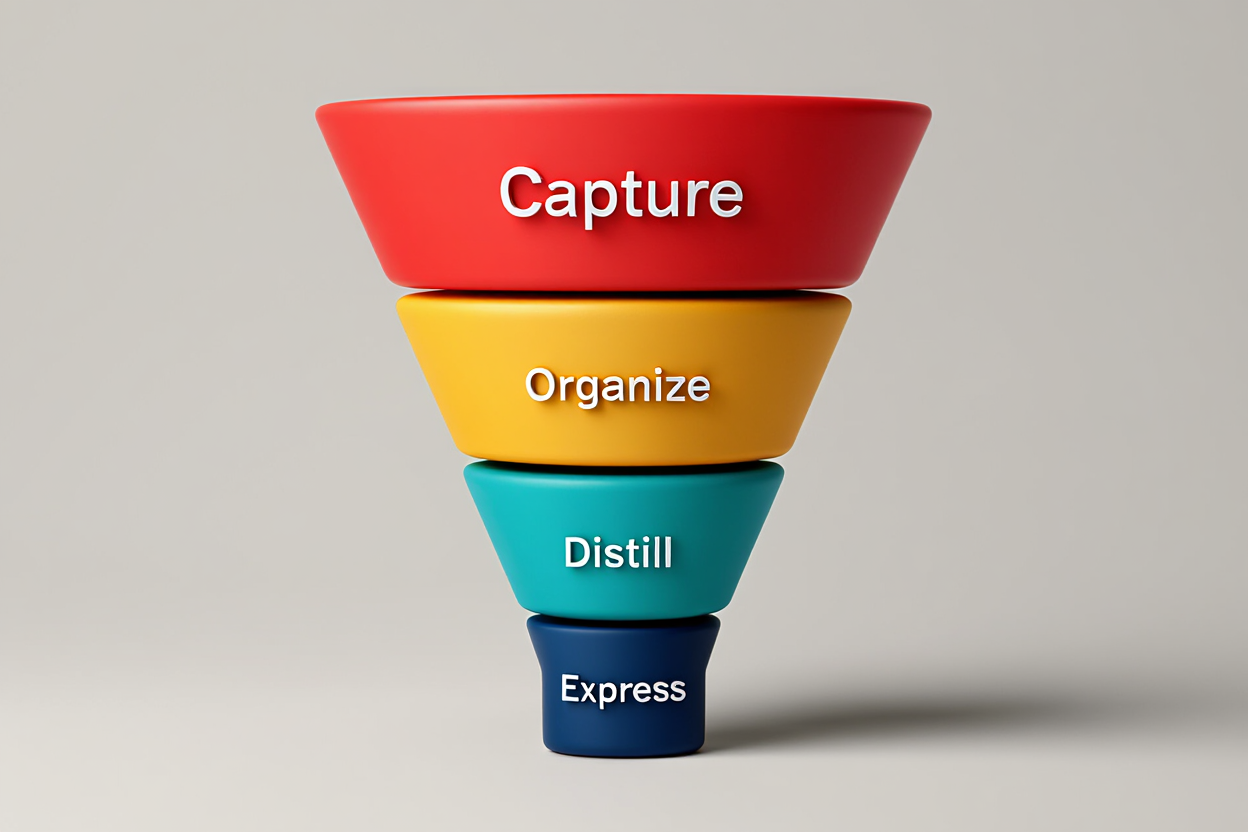
The CODE framework is a complementary structure to PARA that helps you process information and turn it into something useful. It was also developed by Forte in his work Building a Second Brain.
Methodology:
Best Use Cases:
Strengths:
Weaknesses:
How CODE framework functions
Let’s say you have been asked to produce a brand voice and story for a small tailoring workshop.
CODE is a process that can be ongoing. Every day you capture information and you can organize them every week then extract their essence every few weeks and finally produce something whenever you are ready.
Now that we have seen what each method is, let’s have an overall view of them and compare them side by side.
Strengths & Weaknesses: Side-by-Side Comparison Table
To help you decide which method might be best for you, here’s a quick comparison of the three systems:
| Method | Best For | Strengths | Weaknesses |
| Zettelkasten | Writers, thinkers, researchers | Deep idea connection, long-term insights | Steep learning curve, complex linking |
| PARA | Freelancers, project managers | Simple, actionable, scalable | Less idea-centric, more task-focused |
| CODE | Content creators, knowledge workers | Balanced workflow, expressive output | Requires consistent practice, hybrid mix |
Choosing the Right Second Brain System for You
Deciding which second brain method to use depends on your personal needs, working style, and goals.
Here are some questions to ask yourself:
Are you more action-focused or idea-focused?
Do you prefer a rigid structure or organic evolution?
How much time can you dedicate to maintaining your system?
PARA is generally easier to maintain, while Zettelkasten requires more effort to set up and link notes.
You might also consider hybrid models. For example, you could use PARA to organize your overall system and Zettelkasten for note-taking within specific projects.
Alternatively, combining CODE with PARA can create a comprehensive workflow that balances action and creativity. This flexibility is key to personal knowledge optimization.
Best Practices for Implementing Any Second Brain System
No matter which method you choose, here are some general tips to help you get started and stay consistent:
These practices ensure you’re maintaining a second brain that supports smart digital workflows.
The Future of Second Brain Systems: AI, Automation & Intelligence
The future of second brain systems is exciting, with AI-enhanced productivity tools poised to revolutionize how we manage our knowledge. Here are some ways this might unfold:
These advancements could make second brain systems even more powerful, turning them into true extensions of our cognitive abilities.
The future of second brain systems is likely to involve seamless integration with AI, making knowledge management smarter and more dynamic.
Conclusion

In this article we compared three note-taking and second brain systems for organizing your life, inspiring your creativity, and becoming more efficient at your job.
Zettelkasten is the go-to if you want to grow an organic network of ideas and inspire your creativity and innovative force, while PARA and CODE are ideal for organizing your life and work, respectively, depending on whether you favor a structured and rigid method or a linear process.
But the best method for you is the one that suits your needs best and the one you will follow consistently.
Remember that building a second brain system takes time and effort and requires commitment to bear fruit.