
Your second brainA second brain can do far more than store notes. You can use it as a dynamic habit tracker, decision journal, relationship manager, project-based learning hub, and idea-generation system. These unconventional second brain uses turn a passive knowledge archive into an active system for planning, reflection, learning, and creative work.
Below, you’ll learn how each method works, why it is different from ordinary note-taking, and how to set it up in a personal knowledge management (PKM) tool such as Brainfo.
Key Takeaways
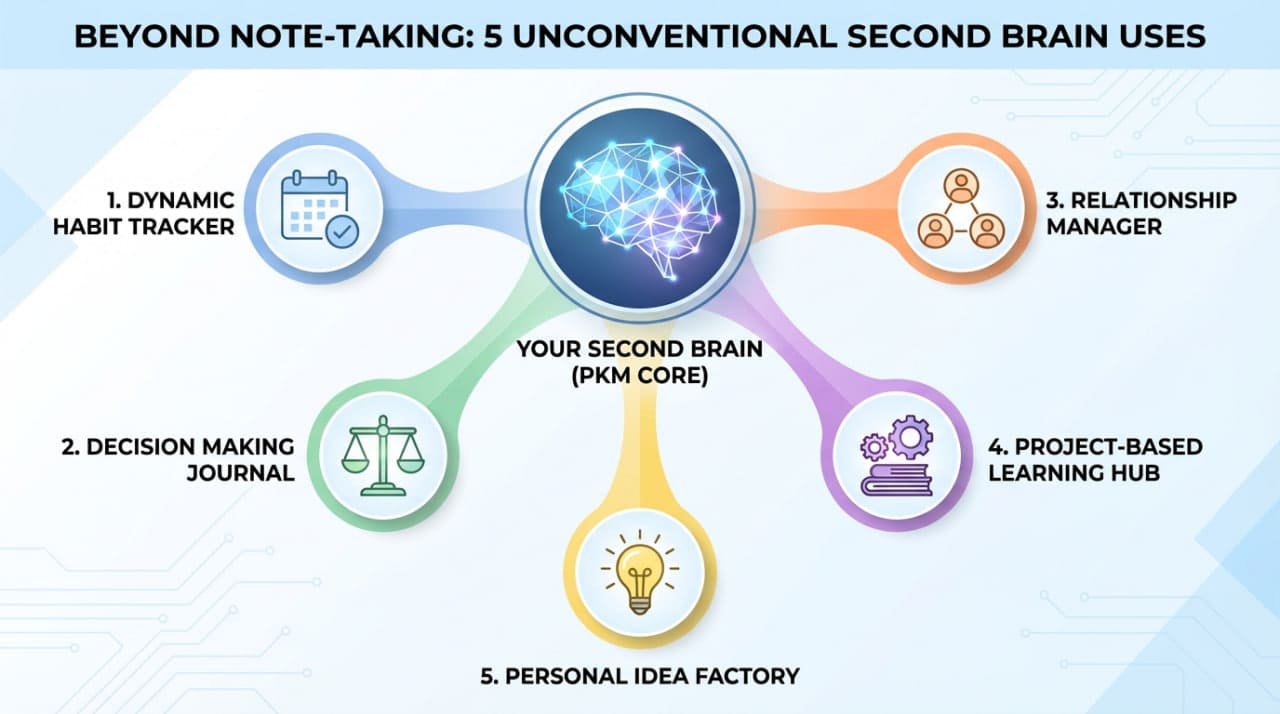
5 Unconventional Second Brain Uses Beyond Note-Taking
A Real-World Second Brain Example: Tracking a 10,000-Step Habit
Let me tell you a personal story of how I used a second brain for personal growth. First of all, I highly recommend reading this article if you don’t know what a second brain is.
Back in June, I decided to join the popular challenge of walking 10k steps a day for a month. I had tried to do it before but every time, after the first two weeks, I got lazy and abandoned it.
This time, however, I decided to make a task in Brainfo, the personal knowledge management tool that I use, to help me stay motivated and get over the finish line.
Most will think that this is something to be done with a smart watch. And that is correct. But your smart watch cannot be your journal as well. This is where Brainfo comes in.
With Brainfo, I:
This process was what kept me motivated and interested in this challenge and got me over the finish line.
Now, let’s learn some more unconventional ways you can use your personal knowledge management system.
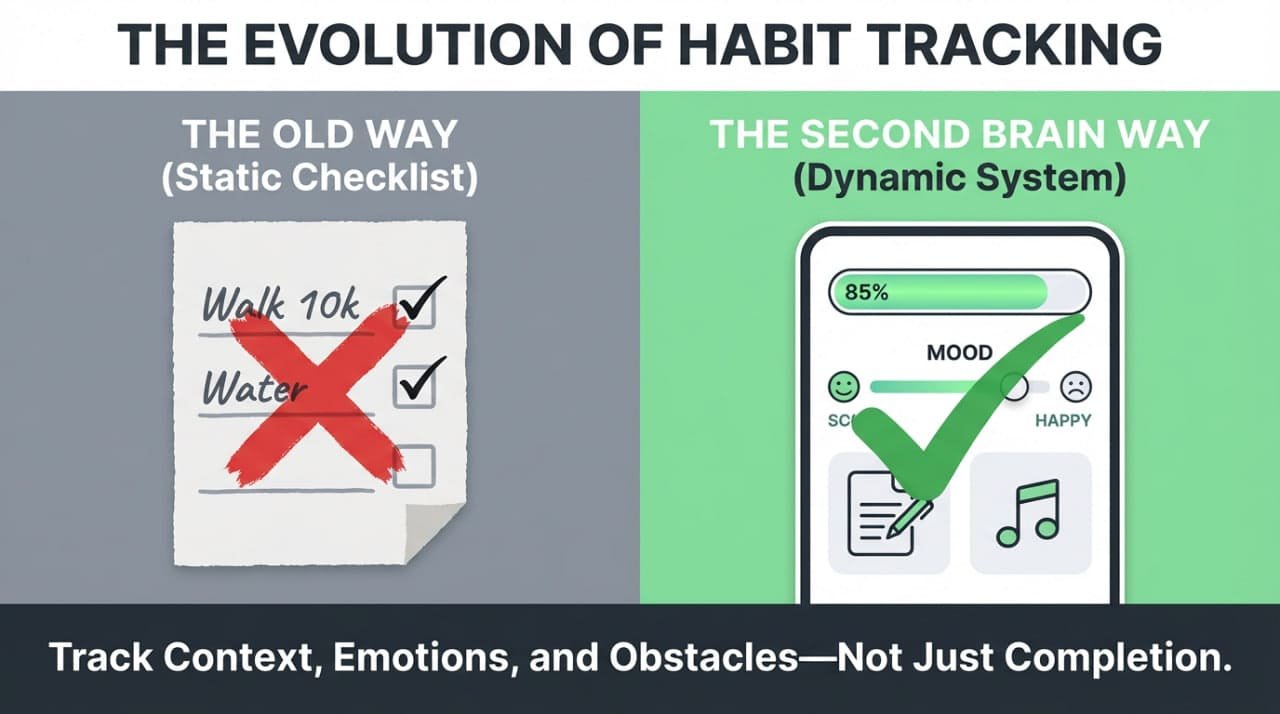
1. Use a Second Brain as a Dynamic Habit Tracker
Forget about the myth of 21 days to develop a habit. According to a study published on PubMed Central, the actual time is 66 days.
Your second brain tool can help you develop good habits and break bad ones with a dynamic, personalized approach.
Idea:
Your second brain tool can help you develop good habits and get rid of bad ones.
Why it’s different:
It’s not just a checklist, it’s a comprehensive system in which you can add different things to create a multimodal space that can serve several functions.
How to do it:
Benefits:
This method gives you creative freedom and deeper insight into your progress, making habit-building more effective and enjoyable.
2. Create a Second Brain Decision-Making Journal
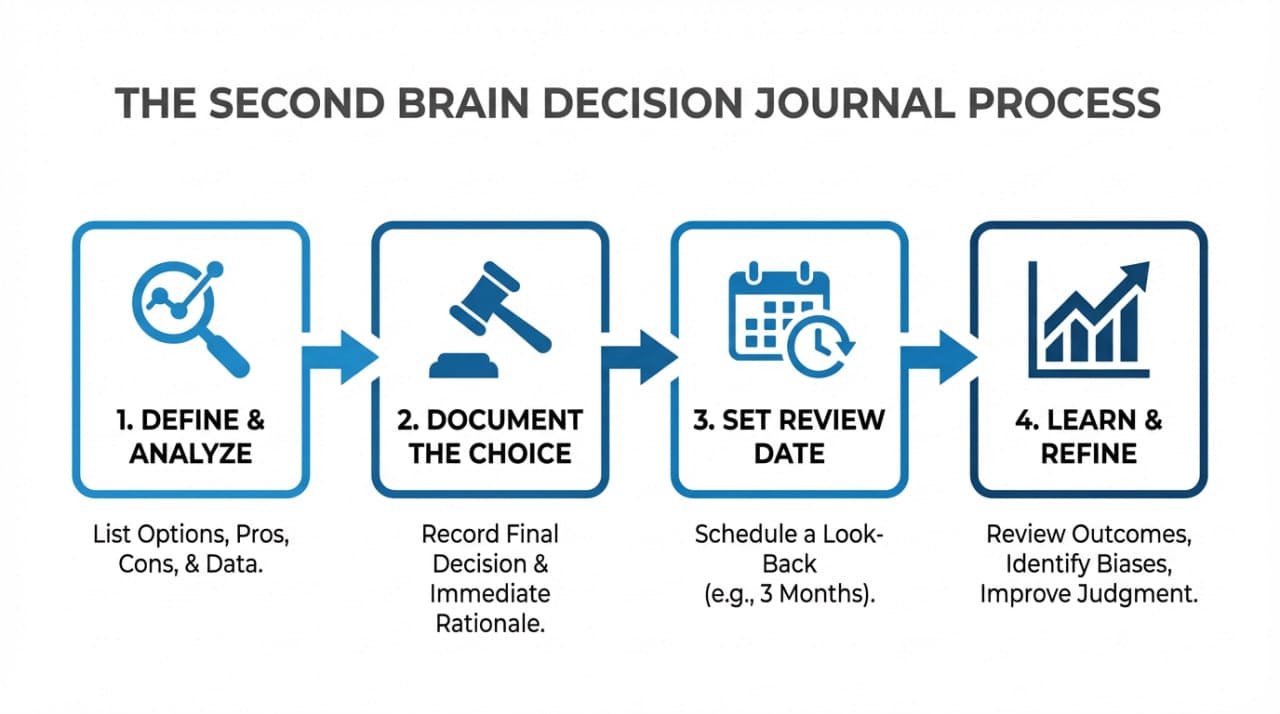
It’s not something nerds do, it’s what great people like Benjamin Franklin did as well. Journaling your decisions and thinking process is an old and time-tested method for making better decisions.
Idea:
Use your second brain to make better, more-informed decisions.
Why it’s different:
It lets you see things from an outside perspective, with pros, cons, and other relevant data. You wouldn’t have to juggle several things in your brain anymore.
How to do it:
Create a template that has “Pros”, “Cons”, “Options”, “Consequences”, “Final Decision”, and “Review After X Months”.
Fill this template in whenever you want to make a decision and then decide.
Benefits:
Helps you make better decisions and creates a log of your decision-making process to be reviewed later and identify mistakes or biases or even strengths, improving the process.
3. Use a Second Brain for Relationship Management
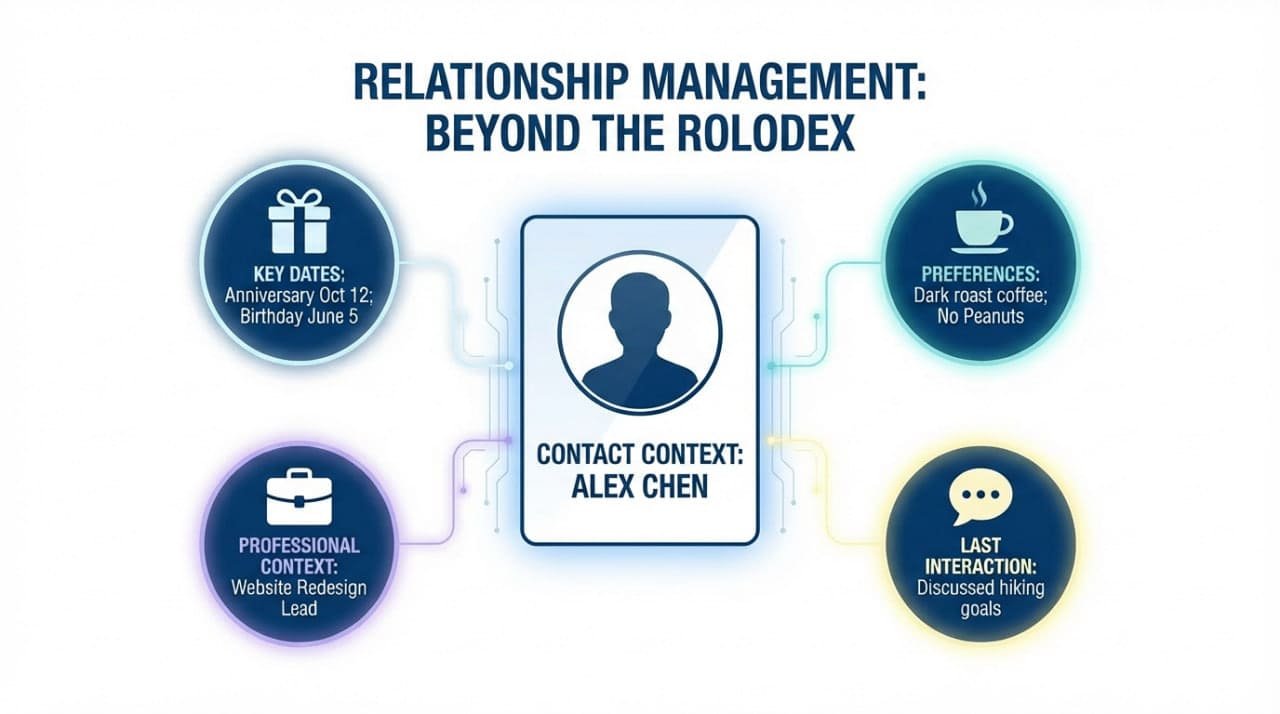
Making friends at work is not just about fun, it will also make you more productive. And if you want to make deep and meaningful relationships you need to know when is your coworkers wedding anniversary, or when their child will have their birthday, etc.
Idea:
Manage your personal and professional relations with your second brain tool.
Why it’s different:
You are not just storing contacts, you are building a network of people and adding details about them that helps your interactions with them.
How to do it:
Benefits:
You will become a more thoughtful friend, family member, or coworker, someone that knows the people around them and remembers details about them.
4. Build a Project-Based Learning Hub
Project-based Learning (PBL) is shown to be more effective at long-term knowledge retention and applying knowledge in new contexts. That’s why you need a solid method to document and track your learning.
Idea:
Use your favorite second brain tool to boost your learning and collect everything in one, searchable, and structured place.
Why it’s different:
Second brain tools are amazing for learning and personal growth and are distinct from note-taking apps in that they give you a lot more structure and options to organize your data, instead of just collecting a load of information.
How to do it:
Create a project and fill it with resources, training material, a schedule and set of tasks, and a report or note section.
Benefits:
Having a plan and structure boosts your learning. Learning alone and at home is notoriously difficult. Because we like to be in a learning environment and work with other human beings.
This method keeps you disciplined and efficient on your learning journey and at the end you will have a special synopsis or even a course that you’ve made during the journey and can refer back to anytime you wanted for a quick refresh.
Make learning an active process instead of passive consumption of data.
5. Turn Your Second Brain Into an Idea Factory
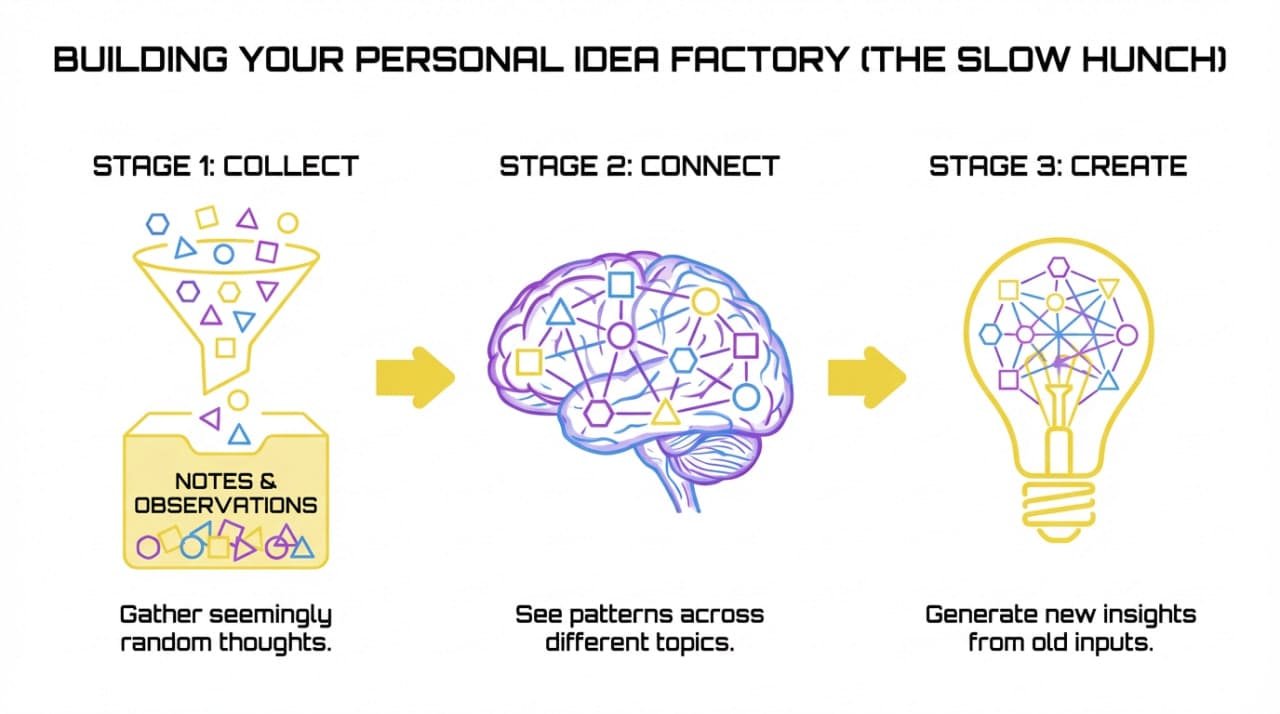
According to Steven Johnson, popular author and theorist, most people don’t get new ideas from Eureka moments, rather, it’s what he calls the “slow hunch”. It’s all the little things that you learn slowly and over time that lead to significant discoveries or breakthroughs.
Idea:
A digital brain is not just for storing ideas, it can connect them together and help you generate new ideas as well.
Why it’s different:
Your second brain can be the creative boost you need to conjure up new ideas. When it’s written down and/or visualized in front of you, with connections being made and everything being searchable, you can infer and develop new ideas without having to do all the hard work in your brain.
How to do it:
Review your notes regularly and draw connections between them and use second brain tools to create graphs and see everything at a glance.
Benefits:
This practice helps you generate new insights and see things that you most likely would have missed.
Conclusion
Apart from all the note taking and task management, you can use your second brain in unconventional ways such as:
While you can use your second brain software to implement methods such as Zettelkasten for note taking, and PARA or CODE for project management, you can also use it in other ways for productivity.
I strongly recommend picking one of these five uses and trying it for a while to see how it’ll change the way you do things.
If you are new to second brains and would like to try the next generation of digital thinking tools make sure to sign up for our waiting list to be among the first users that test our pioneering tool, Brainfo.
FAQs
1. What are the best uses for a Second Brain beyond note-taking?
It evolves from passive storage into an active thinking system for habit tracking, decision journaling, relationship management, and project-based learning.
2. How does it improve daily focus?
By externalizing tasks and ideas, you reduce mental overload. This clear workflow speeds up decision-making and ensures you spend more time acting on insights rather than trying to remember them.
3. Can it actually drive personal growth?
Yes. By tracking habits and reviewing past decisions, you identify patterns in your behavior. This self-awareness helps you refine how you work, think, and live over the long term.
4. How is habit tracking different in a Second Brain?
Unlike a simple checklist, a Second Brain adds context. You can link habits to reflections, motivations, and progress scores, making your routine more meaningful and easier to sustain.
5. What is a decision-making journal?
It’s a template-based system to document the logic behind your choices (pros, cons, and expected outcomes). Reviewing these later helps remove bias and sharpens your future judgment.
6. How does it help with idea generation?
Using links and tags transforms scattered notes into a connected web. This structure makes it easy to synthesize old ideas into new insights, fueling consistent creativity.