
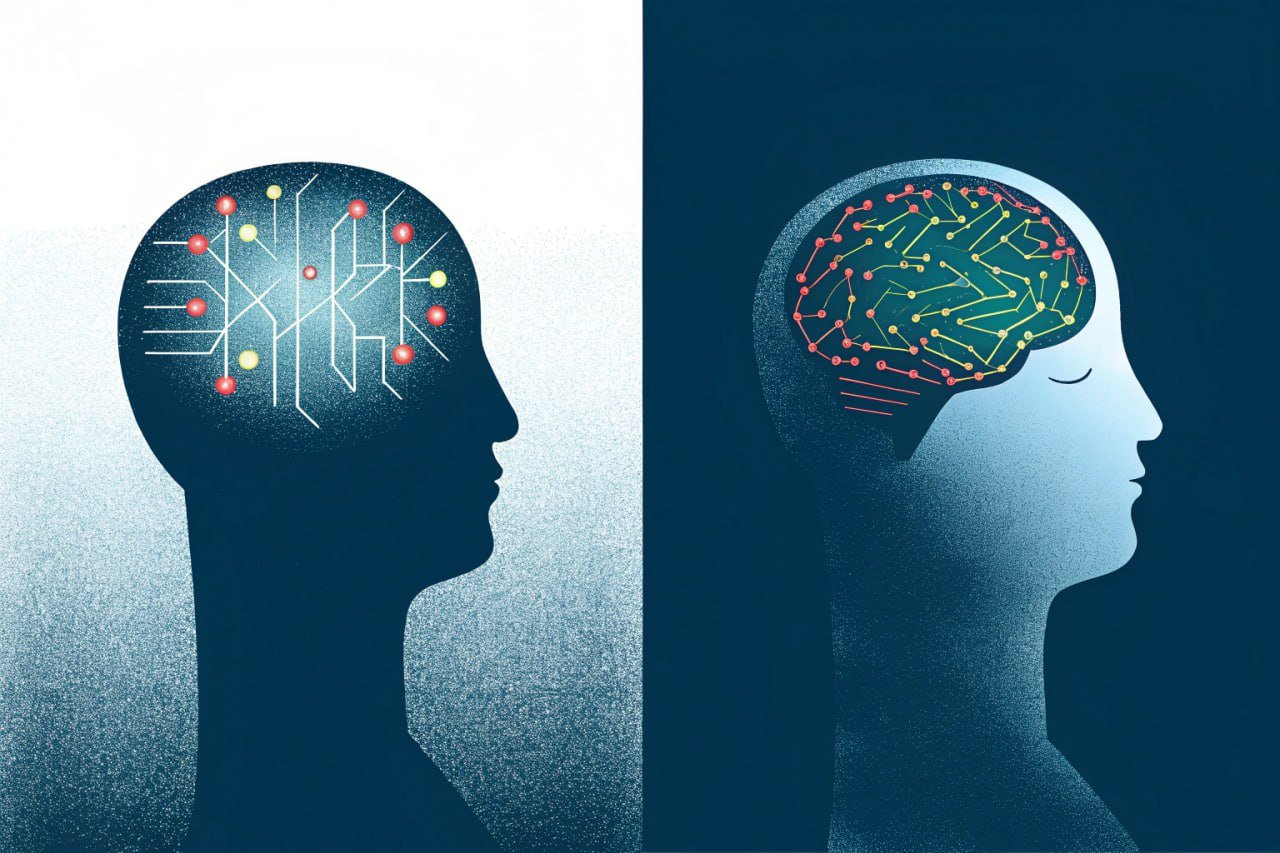
Introduction: Drowning in Information, Starving for Insight
You read an article brimming with breakthrough ideas for your project.
I’ll use this later, you think.
Fast-forward two weeks: You need that insight—but where was it?
Was it a tweet? A newsletter? Your browser history?
The thought dissolves like smoke. Meanwhile, your to-do list mutates, meeting notes pile up unprocessed, and critical tasks slip through cracks in your mental RAM.
Sound familiar?
Welcome to the modern paradox: We’re flooded with more information than any humans in history, yet constantly haunted by the fear of forgetting.
Our brains—evolution’s masterpiece for survival on the savanna—weren’t built for today’s firehose of data, deadlines, and digital fragments.
Enter Artificial Intelligence, promising salvation. Can’t remember? Ask ChatGPT! Need to summarize? Use Claude! But here’s the uncomfortable truth: AI alone can’t solve your information chaos. Why? Because generic AI lacks your context, your goals, and your hard-won insights. It’s like having a librarian who knows every book ever written… except the ones you wrote.
The real breakthrough isn’t AI vs. your brain—it’s the partnership between three forces:
Your human ingenuity (creativity, intuition, purpose),
A curated “Second Brain” (your external system for organized knowledge),
AI as your copilot (amplifying what you’ve captured).
In this article, we’ll explore why human memory and raw AI fall short in the digital age—and how bridging them with a Second Brain turns overwhelm into clarity, potential into progress.
The Fragile Powerhouse: Why Human Memory Falters in the Digital Age
Our biological brain is a marvel.
It dreams up inventions, weaves stories, feels joy and sorrow, and connects abstract ideas in bursts of genius.
It’s not just a storage device; it’s a meaning-making engine, imbuing experiences with context and emotion.
This is the irreplaceable spark of human cognition – creativity, intuition, and deep understanding.
Our Amazing (But Flawed) Biological Hard Drive
Yet, for all its brilliance, human memory wasn’t designed for the relentless demands of the 21st century.
Think of it less like a perfect supercomputer and more like a brilliant but overworked, slightly eccentric artist. It has some critical limitations that directly cause the frustration of “information overload”:
The Forgetfulness Factor (Transience)
That brilliant insight from yesterday’s meeting?
The name of the book your colleague recommended?
The crucial detail buried in an article you skimmed last week?
They vanish like morning mist.
Our brains are wired to prioritize survival, not retaining every project detail or web link.
The Distortion Effect (Bias & Suggestibility)
Ever confidently “remembered” something only to find your notes tell a different story?
Human memory isn’t a fixed recording.
It’s reconstructed each time we recall it, subtly reshaped by our current emotions, beliefs, and even later suggestions.
The Narrow Bandwidth (Limited Capacity)
Your “working memory” – the mental whiteboard where you juggle thoughts – can only hold about 4-7 chunks of information at once.
Trying to keep track of complex projects, multiple deadlines, and streams of incoming data on this tiny stage is like trying to perform a symphony on a postage stamp.
The Scattered Mind (Fragmentation)
Your knowledge isn’t neatly filed in one place.
It’s scattered across sticky notes, notebooks, emails, Slack messages, saved articles, voice memos, and countless apps.
Your brain knows the gist is somewhere, but finding the exact piece you need, when you need it, feels like an archeological dig.
Why “Just Try Harder” Isn’t the Answer
Feeling overwhelmed isn’t a sign of weakness or lack of discipline.
It’s a natural response to an unnatural environment.
The sheer volume, speed, and complexity of information we encounter daily far exceed the processing capacity our brains evolved with.
You wouldn’t blame a cup for overflowing if you poured an ocean into it.
Similarly, struggling to “keep it all in your head” isn’t a personal failing – it’s a fundamental mismatch between our biology and our reality.
This digital age demands a different approach, one that works with our human strengths instead of fighting against our cognitive limits.
The Shallow Genius: Where AI Memory Falls Short
Artificial Intelligence dazzles us with its ability to recall facts, summarize texts, and connect ideas across millions of sources in seconds.
Its strengths are undeniable: vast storage, near-instant recall, and unparalleled pattern recognition across massive datasets.
It’s like having the world’s largest library and fastest research assistant at your fingertips.
AI: The World’s Knowledge, But Not Your Knowledge
Yet, for all its power, AI has critical limitations that make it an incomplete solution for managing your intellectual life. It lacks the deeply personal, contextual understanding that fuels true productivity and insight:
The Gap Emerges
So, where does this leave us?
This is the critical gap.
Relying solely on your biological brain leads to overwhelm and lost potential.
Relying solely on generic AI yields impersonal, often irrelevant outputs.
Neither, alone, is equipped to handle the complexity and personal nature of modern knowledge work.

Building Your Bridge: Enter the “Second Brain” System
We’ve seen the problem: Our brilliant-but-limited biological memory struggles under modern demands, while powerful AI lacks the personal context to truly work for us.
The solution isn’t choosing sides – it’s building a bridge between them.
That bridge is your Second Brain.
What is a Second Brain? (Your Personal Knowledge Powerhouse)
Coined by productivity expert Tiago Forte (Building a Second Brain®, or BASB®), a Second Brain isn’t science fiction.
It’s a practical, trusted, external system you create for capturing, organizing, distilling, and retrieving your knowledge.
Think of it as:
Its core purpose is twofold:
How Your Second Brain Solves the Core Problem
Your Second Brain directly addresses the critical weaknesses of both human memory and raw AI, transforming overwhelm into organized power:
Captures Everything (Stops the Leak): Got a fleeting idea in the shower? Read a crucial article? Jotted down a meeting action item? Your Second Brain provides an instant, trusted place to capture it before it vanishes. No more lost gems or forgotten tasks. This solves the Forgetfulness Factor.
Organizes for Context (Your World, Your Structure): Instead of dumping everything into chaotic folders or relying on keyword searches alone, a Second Brain lets you organize information around your life – active Projects, key Areas of responsibility, helpful Resources, and future possibilities (Archives/Someday).
This mirrors how you think and work. This solves Fragmentation and provides the Personal Context AI lacks.
Distills Meaning (From Raw Data to Insight): It’s not just a dumping ground. Your Second Brain encourages you to process captured information – summarize key points in your own words, highlight connections, extract actionable steps.
This transforms raw data into valuable, personalized insights you can actually use. This combats the Impersonal/Generic nature of AI and leverages human meaning-making.
Enables Reliable Retrieval (Find It Fast): Need that specific note, quote, or reference right now? A well-maintained Second Brain lets you retrieve exactly what you need, when you need it, without frantic searching through emails or relying on faulty recall.
Your knowledge is always at your fingertips. This solves the Limited Capacity and Unreliable Retrieval problems of human memory.
Creates a Cohesive Foundation (Your Intellectual Asset): Over time, your Second Brain evolves from a simple note-taking system into a rich, interconnected repository of your unique knowledge and experience.
This curated foundation becomes your most valuable intellectual asset – the solid ground upon which both your human creativity and AI collaboration can thrive. This bridges the gap, providing the structured, personal input AI needs and the reliable external memory your brain needs.
Your Second Brain isn’t about replacing your mind or AI; it’s about empowering both by creating the organized, personal knowledge layer in between.
It’s the missing piece that makes the partnership truly powerful.
The Power Trio: Your Brain + Second Brain + AI
We’ve built the bridge: Your Second Brain, a curated repository of your unique insights and knowledge.
Now, it’s time to unleash the true potential of this system by bringing AI into the fold – not as a replacement, but as a powerful amplifier.
This is where the magic happens.
Why Your Second Brain is AI’s Essential Partner
Raw AI is like a brilliant but clueless intern.
It has access to the world’s information but zero understanding of your priorities, projects, or past work. Your Second Brain solves this by providing the rich, personal context AI desperately lacks.
It tells the AI: “This is who I am, what I’m working on, and what matters to me.” Suddenly, generic AI transforms into your personal AI assistant.
Supercharging Your System with AI: The Partnership in Action
Imagine seamlessly combining your unique human perspective (stored in your Second Brain) with AI’s processing power.
Here’s how this partnership looks in practice:
AI as Your Hyper-Specific Researcher:
AI as Your Ideation Spark Plug:
AI as Your Summarizer & Reframer:
AI as Your Draft Generator (Fueled by Your Thoughts):
Core Message Reinforcement: You Are Irreplaceable
This is the crucial takeaway: AI isn’t replacing you; it’s amplifying the value of your uniquely curated knowledge stored in your Second Brain.
Your biological brain provides the original insight, creativity, and purpose.
Your Second Brain provides the organized, personal context.
AI then becomes an incredibly powerful tool to act upon that context: researching, ideating, summarizing, and drafting based on what matters to you.
Without your Second Brain, AI remains generic and impersonal.
With it, AI becomes a true partner, transforming your curated knowledge into tangible results and freeing you to focus on high-level thinking and decision-making.
Your Second Brain makes AI truly relevant to you.
Getting Started: Building Your Bridge to Clarity and Control
The vision is clear: A powerful partnership between your human insight, your organized Second Brain, and AI’s processing muscle. But how do you start building this bridge? The key is simplicity and action. Forget perfection – focus on progress.
Your First Steps Towards a Second Brain
Building a Second Brain isn’t about overhauling your life overnight. It’s about small, sustainable habits. Start here (no specific tool required!):
Choose Your Capture Tool (Keep it Simple!): Your phone’s Notes app? Google Keep? A dedicated app like Apple Notes, Obsidian, or Notion? It doesn’t matter. Pick the easiest, most frictionless place you’ll actually use right now. The best tool is the one you use consistently.
Capture Relentlessly (But Wisely): Get ideas, quotes, tasks, and sparks out of your head immediately. See an insightful article snippet? Capture it. Have a project idea in traffic? Voice memo it. Set up one simple “Inbox” (a single note, folder, or tag) as your initial dumping ground. Don’t judge, just capture. This stops the leak of valuable thoughts.
Organize by Actionability & Projects (Start with PARA): Don’t create complex taxonomies yet. Focus on what’s alive: What are you actively doing? Create just a few buckets inspired by Tiago Forte’s PARA method:
Review Regularly (Micro-Habits Win): Schedule 10 minutes, once a week. Process your Inbox: Delete trash, file reference stuff into Resources/Areas, identify actionable items for Projects. Consistency beats marathon sessions. This is where captured fragments become usable knowledge.
Start Small, Iterate (Focus is Key): Do NOT try to organize your entire digital life. Pick one current, pressing project. Focus only on capturing and organizing information directly relevant to that project. See the benefit? Then gradually expand. Your system evolves with you.
The Future of Organized Thinking: You, Amplified
Imagine a world where you’re no longer drowning in tabs, hunting for lost notes, or struggling to recall crucial details.
Your unique insights are securely captured and thoughtfully organized in your Second Brain.
When you face a challenge, you effortlessly retrieve exactly what you need.
And when you need scale or speed, you leverage AI – not as a mysterious oracle, but as a powerful partner fueled by your own curated knowledge.
This is the empowered future of knowledge work:
You (Creativity, Purpose, Judgment) + Your Second Brain (Organized, Personal Knowledge) + AI (Processing Power, Scale) = Unstoppable Clarity and Control.
Conclusion: Reclaim Your Cognitive Space, Amplify Your Potential
We began drowning in information, haunted by forgotten ideas and generic AI responses.
We discovered the root cause: our brilliant-but-limited human memory struggling against digital overload, while AI remains a contextless oracle.
Neither alone is enough.
But you now hold the key: Your Second Brain.
It’s not just a note-taking system—it’s your intellectual sanctuary. A place where:
This is the true power trio:
The future belongs not to those with the best memory or the fastest AI—but to those who build the bridge between them.
Stop drowning. Stop forgetting. Stop settling for generic outputs.
Your organized knowledge is your greatest advantage.
Start building your Second Brain today—one capture, one project, one insight at a time. When you do, you won’t just manage information…
You’ll master it.