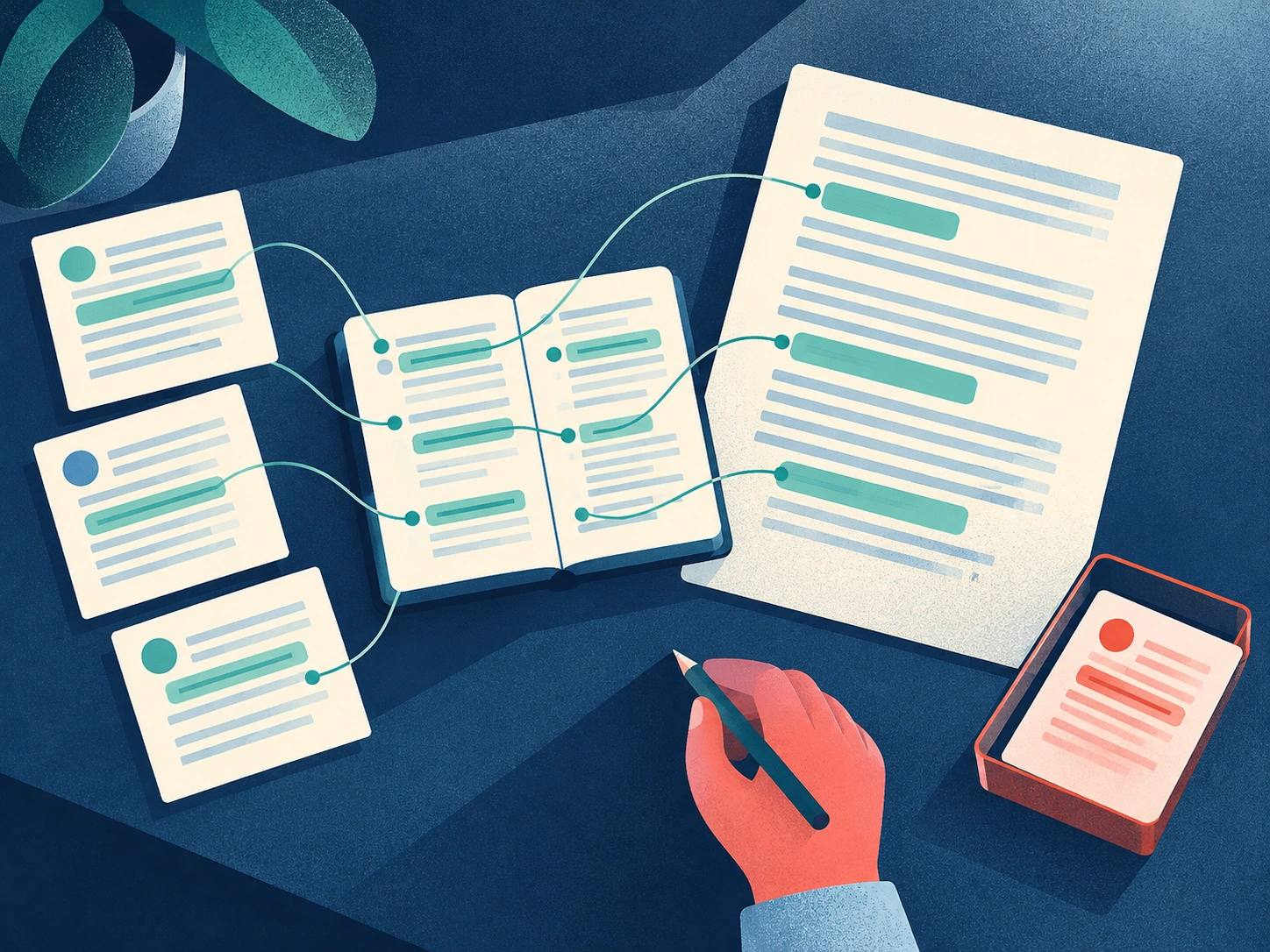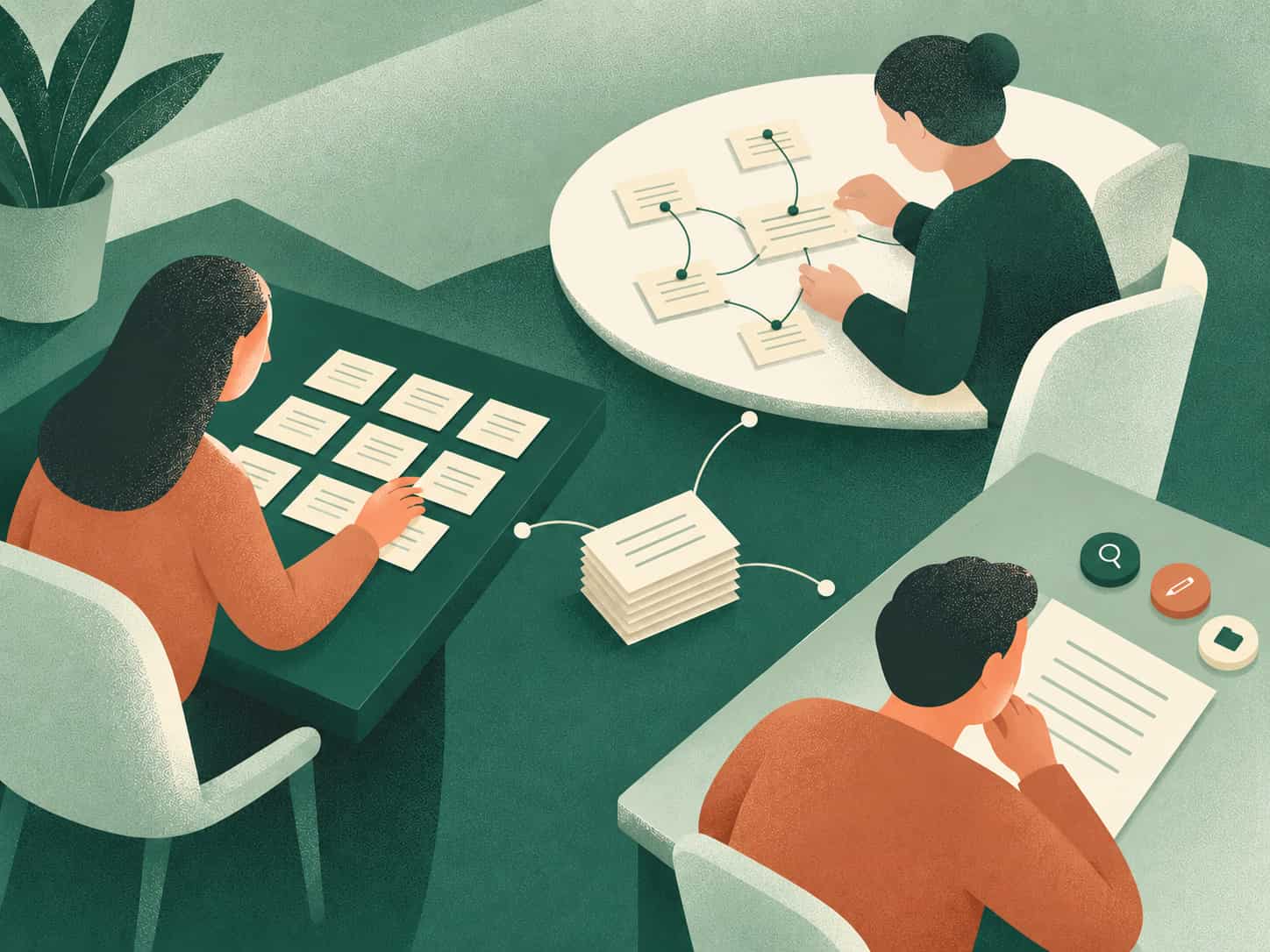

A new era of thinking has begun, where our tools don’t just store what we know, but help us think smarter, learn faster, and create more.
Personal Knowledge Management (PKM) has evolved from simple digital storage to AI-Powered Personal Knowledge Management.
It has moved through three eras: Digital Filing Cabinets (simple note taking apps), Networked Brains (apps that help you link ideas), and now Intelligent Partners, AI-driven systems that actively collaborate, summarize, and connect insights automatically.
AI-enhanced PKM transforms knowledge management into a true competitive advantage by saving time, uncovering hidden patterns, and enabling deeper thinking.
In this blog we will explore the evolution of note-taking and Personal Knowledge Management (PKM) from simple digital storage to AI-powered intelligent personal knowledge management and explore the most promising third-generation for the future of PKM app in the market.
Let’s dive in!
The Three Eras of Personal Knowledge Management
Over the past two decades, Personal Knowledge Management has moved through distinct phases.
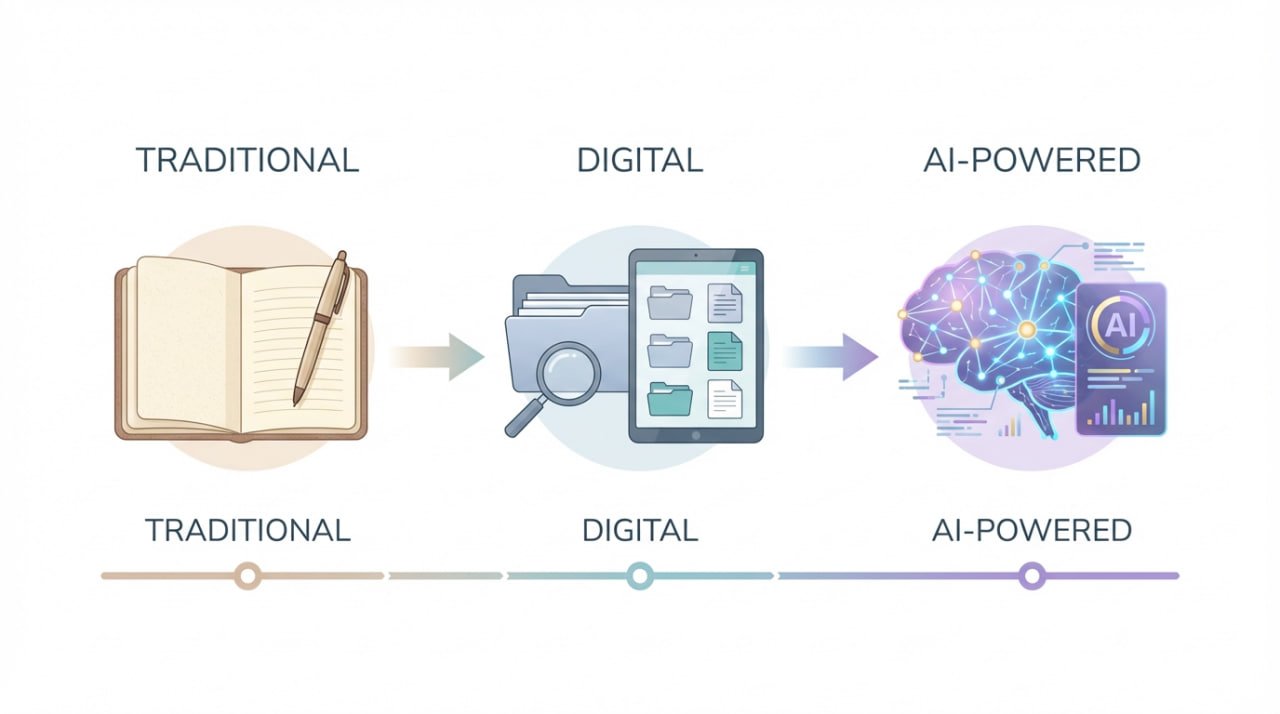
What began as a simple effort to digitize notes evolved into systems that connected ideas into networks, and now, with the rise of artificial intelligence, has reached a stage where our tools actively collaborate with us.
Let’s take a look at each stage in more detail:
Era 1: The Digital Filing Cabinet (Storage)
The first era of Personal Knowledge Management began with digital storage software. Tools like Evernote and OneNote offered a simple promise: capture everything and store it in one place.
For the ambitious professional, this was liberating. Suddenly, notes, articles, and documents could be kept neatly in the cloud, accessible across devices, and tagged for future reference.
But while this solved the problem of storage, it introduced a new challenge: retrieval.
These systems worked like archives that are efficient for depositing information, but less effective when it came to pulling meaning out of the mass.
Professionals often found themselves spending more time searching through their collections than actually using them.
The digital filing cabinet was a step forward, but it left knowledge largely static, waiting to be rediscovered.
Era 2: The Networked Brain (Connection)
The second era transformed the future of PKM from a collection of isolated files into a living web of interconnected ideas.
Tools such as Roam Research, Obsidian, and Notion shifted the focus from storage to connection.
By linking notes together, professionals could create a “networked brain,” where knowledge became discoverable and relationships between ideas emerged more organically.
This was a breakthrough in how we thought about personal information.
Instead of searching for a single note, users could explore an entire web of associations, often stumbling upon insights they might not have anticipated.
Yet, despite its elegance, this approach still required constant manual effort.
The system only worked as well as the user’s discipline in creating links, maintaining structure, and curating their knowledge.
In practice, the networked brain expanded possibilities but still kept professionals firmly in the role of system managers.
Era 3: The Intelligent Partner (AI Powered PKMs)
The third and current era marks the most profound evolution of note-taking: the intelligent partner.
These AI Powered systems don’t just store or connect; they create.
Instead of passively holding information, AI-Enhanced Knowledge Management actively works alongside the user, summarizing material, suggesting relevant connections, and retrieving knowledge based on meaning rather than keywords.
This new approach reduces the friction of organization and dramatically accelerates the process of turning information into insight.
Imagine having a partner that doesn’t just remind you of a note you once wrote, but also connects it with a new article you’re reading and a past conversation you recorded to draw out patterns you might have missed.
“This is the promise of AI-enhanced PKM: tools that think with you, freeing ambitious professionals to focus less on managing information and more on applying it to solve problems, make decisions, and create opportunities.”
👉 How to Build a Personal Knowledge Graph
Why AI-Enhanced PKM Is a Necessity, Not a Luxury
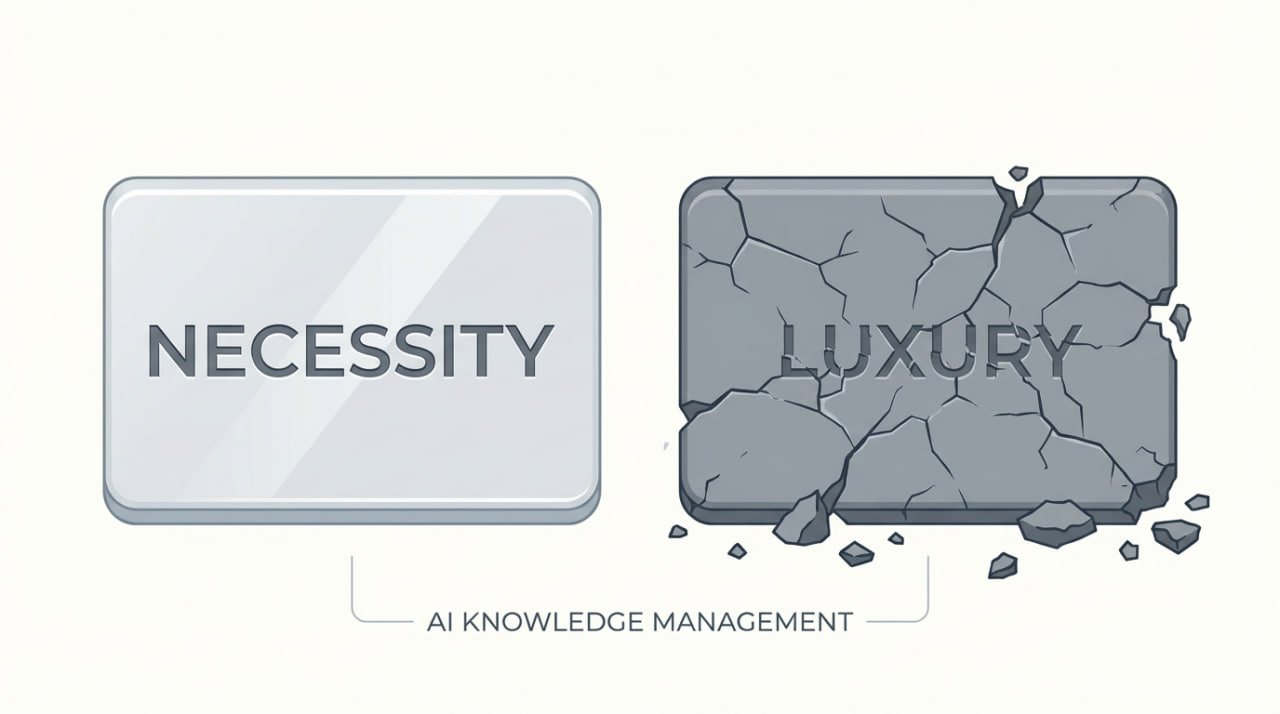
AI-enhanced Personal Knowledge Management is no longer an optional upgrade as it is rapidly becoming a necessity for professionals who want to stay ahead.
Even the most disciplined traditional system of notes and connections leaves individuals buried under a growing avalanche of documents, articles, and ideas as they keep collecting.
When AI summarization tools can turn hours of reading into key takeaways, suggest connections you would never have noticed, and retrieve insights instantly through semantic search, it creates time and mental space for higher-level thinking.
In industries where speed, adaptability, and insight determine success, the ability to work alongside an intelligent personal knowledge management becomes a decisive advantage.
As more organizations recognize this, AI-Enhanced Knowledge Management will become not just a personal preference but an expectation.
“Finally, adopting AI now means future-proofing your workflow.
Just as digital note-taking once replaced paper notebooks, and networked tools replaced isolated files, AI will inevitably become the standard for managing personal knowledge.”
The difference is that this evolution of note-taking is happening faster than the ones before it.
Those who resist will find themselves managing outdated systems or playing catch up while others are already leveraging intelligent tools to get ahead.
For anyone serious about their growth and success, embracing AI-enhanced PKM is no longer a luxury—it’s the only way forward.
Real Benefits of AI-Powered Personal Knowledge Management
One of the most immediate benefits of AI-enhanced Personal Knowledge Management is the shift from keyword search to semantic search notes.
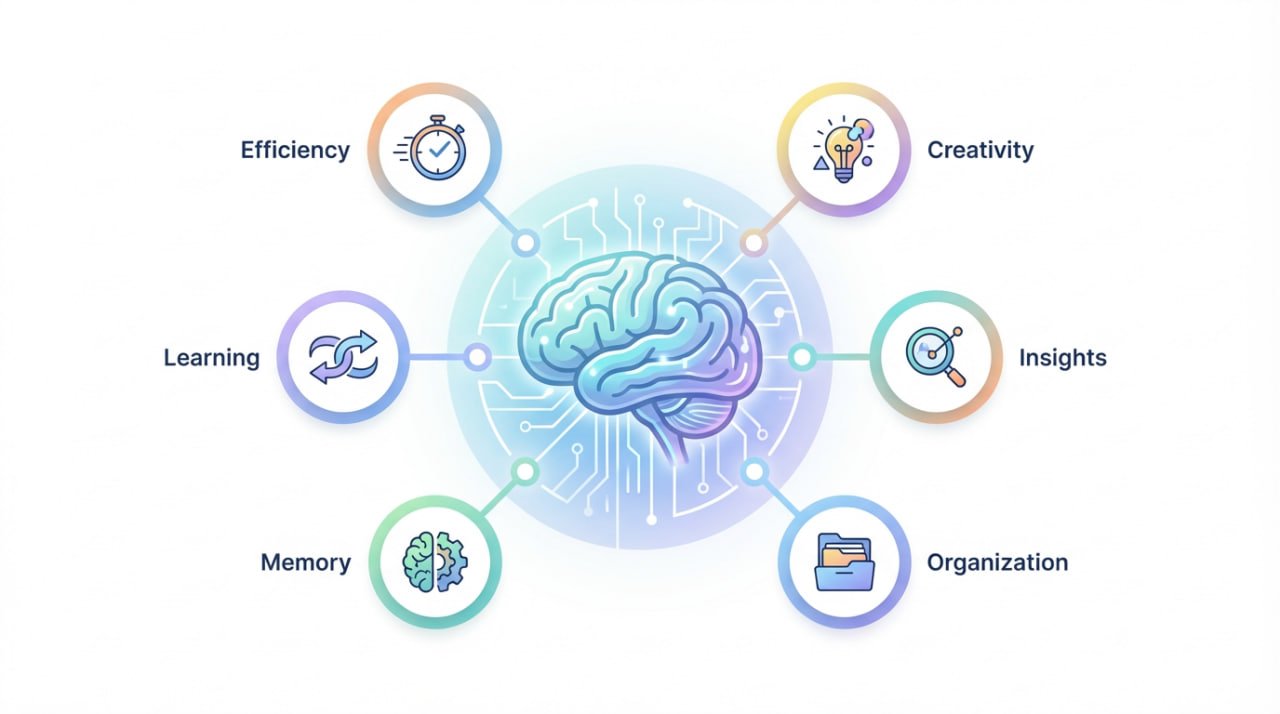
Instead of digging through folders or trying to remember exact phrases, professionals can now find information based on meaning.
Ask a question in your own words, and the system retrieves the most relevant ideas, notes, and sources, even if you didn’t tag or label them precisely.
This alone saves countless hours and eliminates the frustration of hunting for knowledge you know you captured but cannot locate.
Another powerful advantage is AI-summarization tools. Whether it’s a lengthy report, a dense academic article, or meeting notes, AI can distill the essential points in seconds.
You no longer need to sift through every detail to understand the core message, they can absorb key insights quickly and decide where to dig deeper. Over time, this allows for faster learning and more informed decision-making.
Here’s a video to learn how to summarize books with ChatGPT from Mr. Tiago Forte’ himself:
AI also transforms the way connections between ideas are discovered. In traditional PKM systems, linking notes required deliberate effort.
With AI, the system recognizes patterns and relationships on its own, surfacing insights that might otherwise remain hidden.
Imagine drafting a new strategy document and being reminded of a concept from a book you read months ago, or a note from a past project that suddenly becomes relevant.
These intelligent links don’t just organize your information; they expand your thinking.
AI-Enhanced Knowledge Management supports personalized growth beyond organization and retrieval.
By learning your patterns, goals, and interests, it can recommend resources, highlight gaps in your knowledge, and guide you toward deeper understanding.
In practical terms, the outcome of these benefits translates to less time spent managing information and more time spent applying it.
With AI handling the background work, ambitious professionals can focus on what matters most, thinking strategically, making better decisions, and creating opportunities from the knowledge they’ve gathered.
This shift turns the future of PKM from a personal archive into a true competitive advantage.
How AI-Powered PKM Changes the Way We Learn
Brainfo, One Second Brain, Infinite Clarity
What sets Brainfo apart in the era of AI-enhanced Personal Knowledge Management is its ability to function not just as a tool, but as a complete ecosystem for capturing, organizing, and transforming knowledge.
At its core, Brainfo combines the familiar functionality of note-taking, document creation, and bookmarking with advanced AI capabilities. This makes Brainfo a true second brain for individuals and teams.
Brainfo brings everything into one unified space, ensuring that notes, documents, tasks, and even videos or web links are seamlessly integrated and accessible.
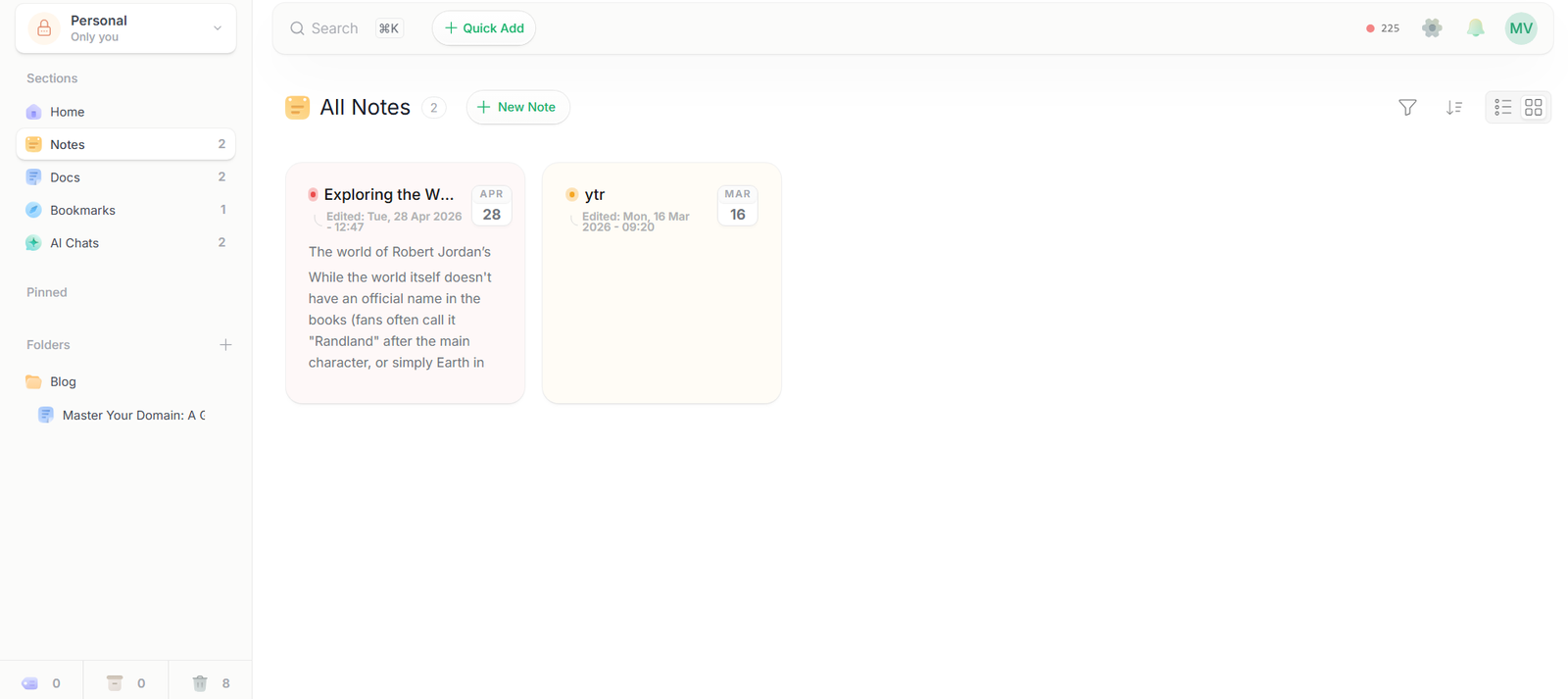
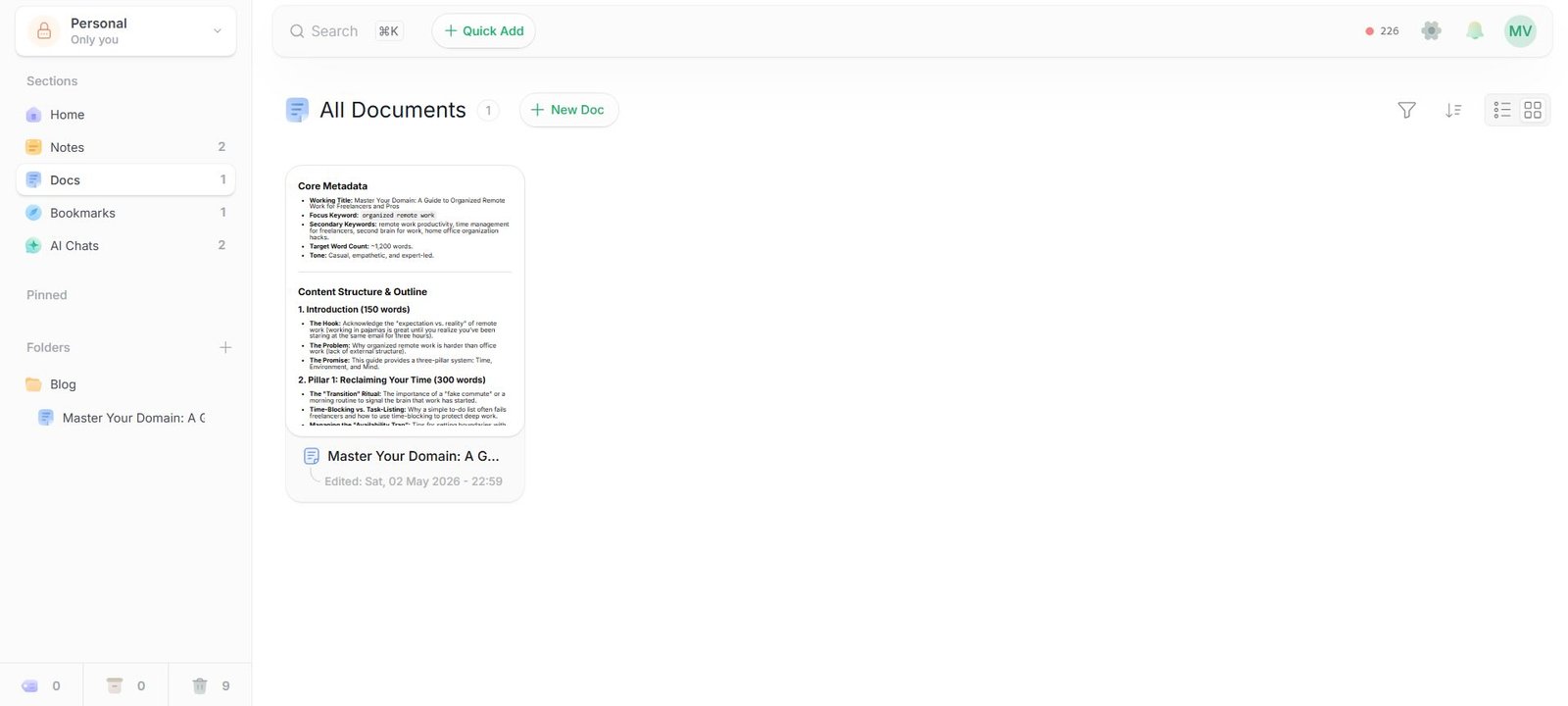
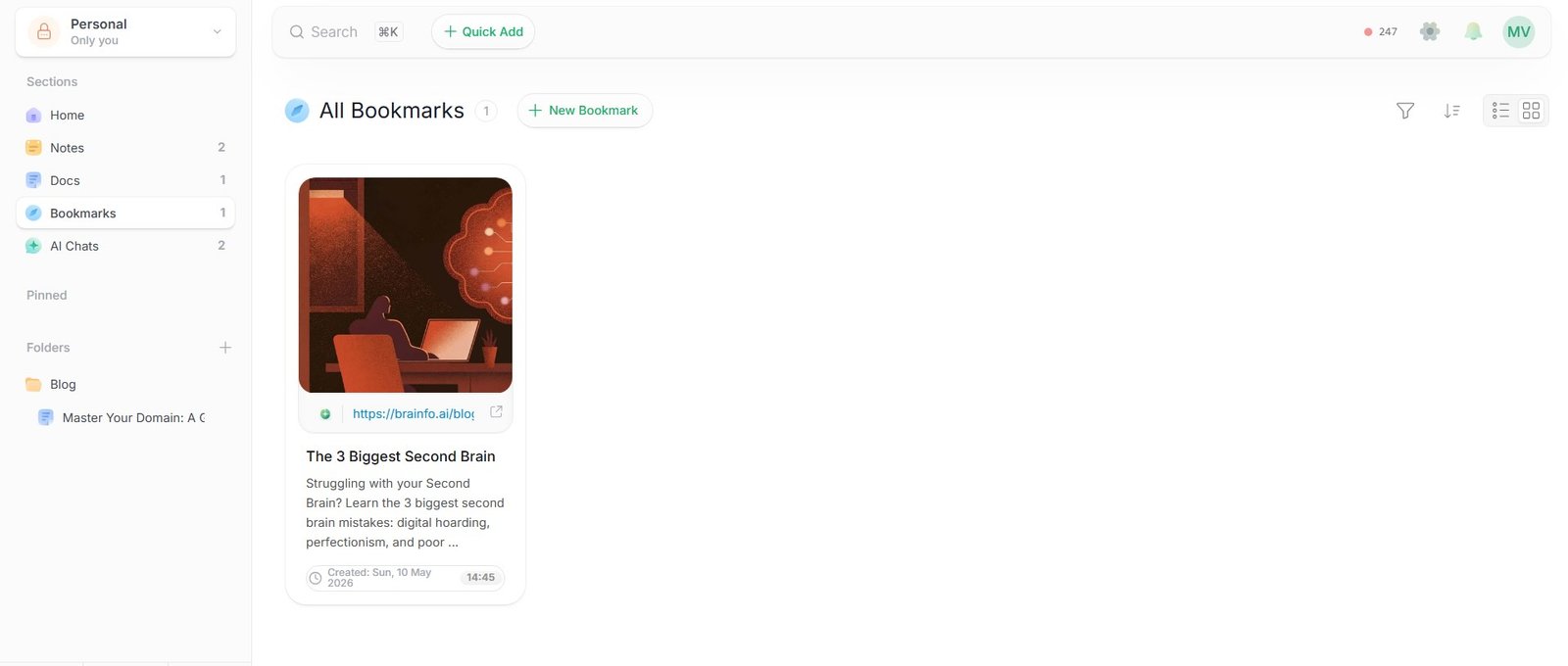
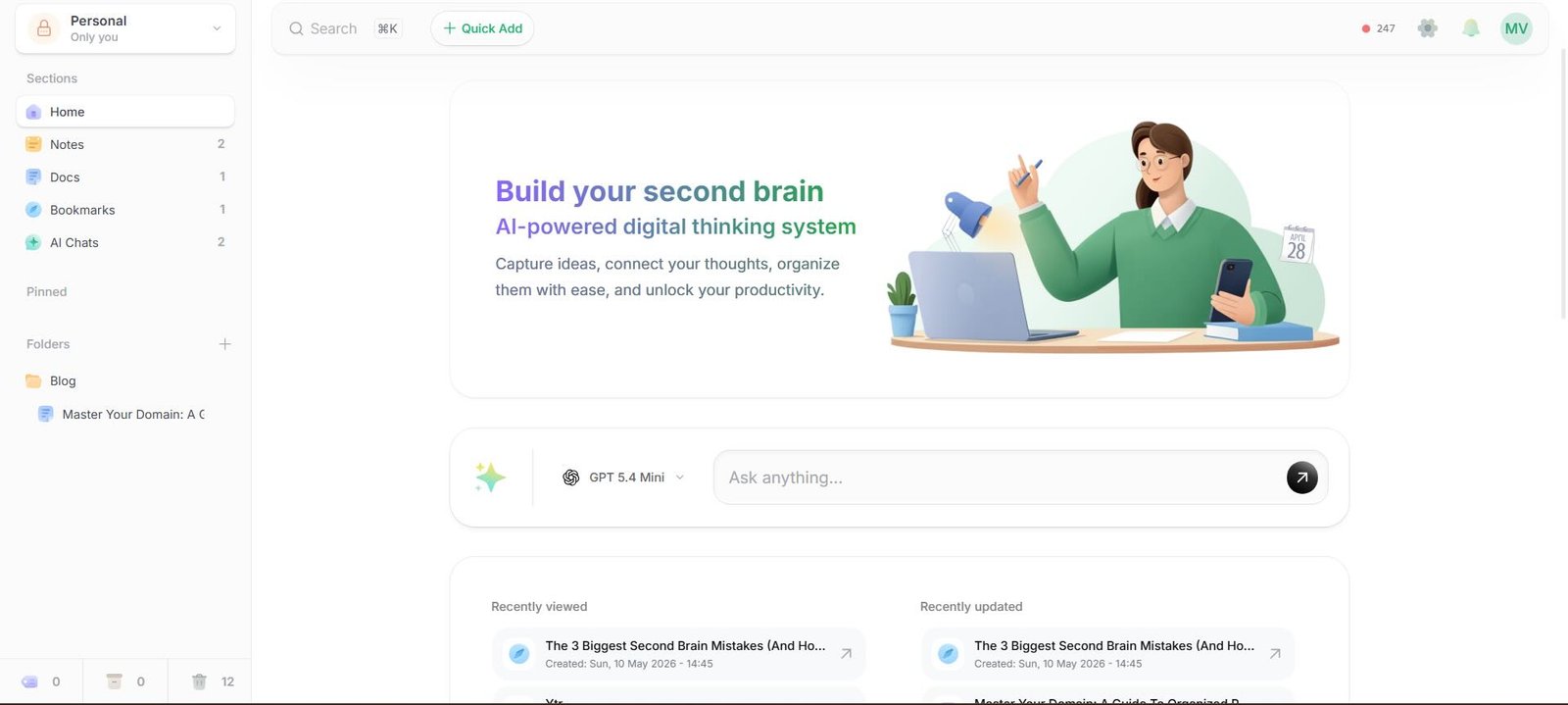
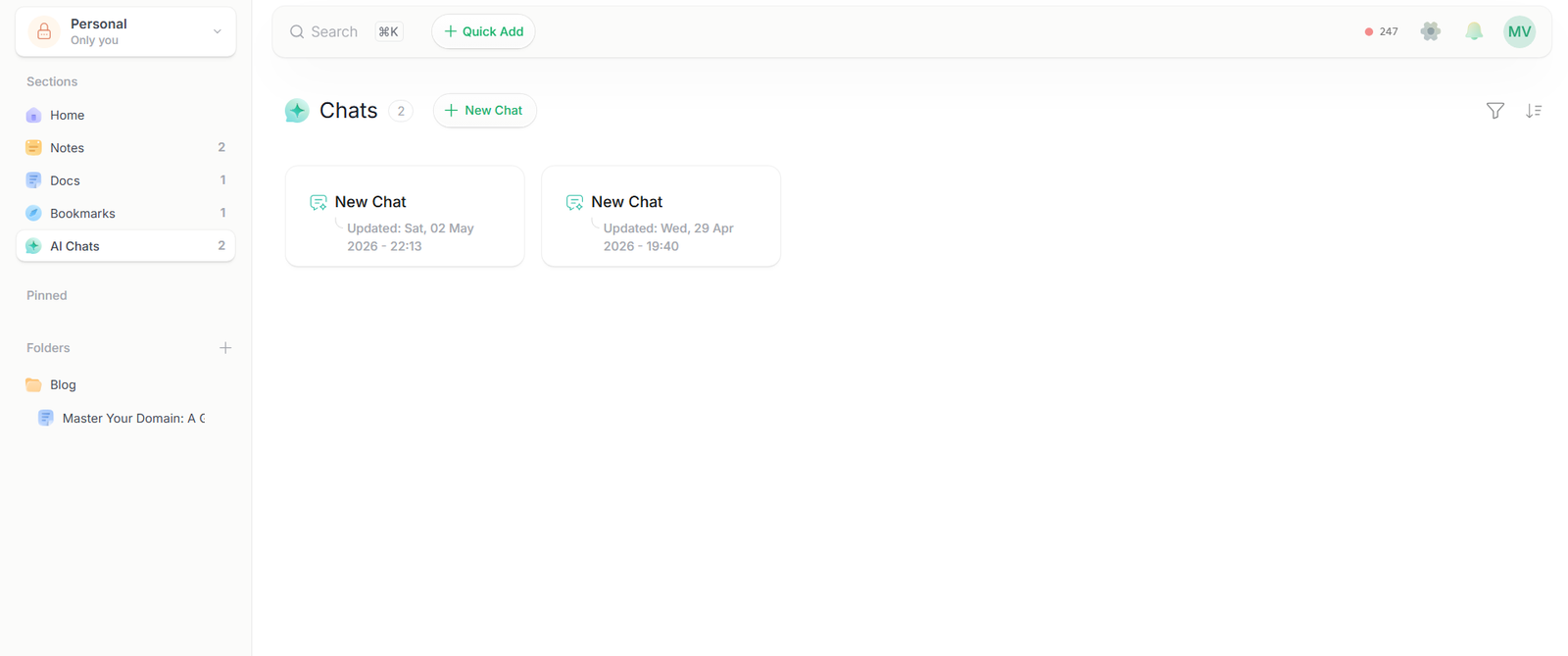
The result is a flexible, intelligent personal knowledge management that grows with you, and adapts to your style of work while giving you the competitive edge with AI-powered intelligence.
Brainfo also prioritizes reliability with offline-first architecture, end-to-end encryption options, daily backups, and local-first storage; users can maintain true ownership and security of their data.
Real-time collaboration, role-based permissions, and multiple workspace support make it equally powerful for organizations that need knowledge to flow smoothly across projects.
In short, Brainfo represents the future of Personal Knowledge Management: A platform where information capture, organization, and artificial intelligence get combined.
It is more than a productivity platform; it is a modern knowledge hub designed to help ambitious professionals and teams think faster, work smarter, and unlock the full potential of their ideas.
By combining the best of traditional PKM with the intelligence of AI, Brainfo positions itself as the definitive tool for the new era of AI productivity tools.
Conclusion
With the exposure we have to new information, we have entered a new era of personal knowledge management.
The new generation of tools no longer consist of traditional folders or even dynamic networks. They can now be considered a partner for your mind.
These AI-Enhanced Knowledge Managementtools don’t just store or connect information, but actually help us interpret, create, and act on it.
By reducing the cognitive burden of managing knowledge manually, these systems create the space for more creativity.
The future belongs to those who adopt tools that amplify their intelligence rather than just extend their memory.
This is why Brainfo was built: to be the definitive platform of this generation of tools.
For those ready to stay ahead, the time to embrace this shift is now.
Frequently Asked Questions
1. Can AI in PKM really make a difference in my career growth and competitiveness, or is that just marketing hype?
Yes, it gives you faster insights, smarter decisions, and more creative output, which directly impacts career success.
2. How does a tool like Brainfo stand out from other AI-driven platforms that promise to be a “second brain”?
Brainfo integrates notes, documents, tasks, media, and AI Copilot into one ecosystem, so nothing is fragmented.
3. Is AI-enhanced PKM safe to use, especially when it comes to storing sensitive work or personal data?
Yes, platforms like Brainfo use offline-first options, encryption, and backups to keep your data secure.
4. What is the first simple step I can take today if I want to start moving into this new era of AI-powered knowledge management?
Start by choosing one tool, capture your ideas there, and let AI show you how much easier knowledge work can become.
5. Why is AI-enhanced PKM a necessity instead of just being a nice-to-have tool?
Because information is growing too fast, and AI is the only way to turn overload into actionable insights.
6. How does AI actually save me time in managing my personal knowledge compared to traditional apps like Evernote or Notion?
AI can summarize long content, suggest connections you might miss, and find things by meaning, not just keywords.