The promise was to build a Second Brain. The reality? A massive, stress-inducing pile of unread notes. The productivity industry tends to sell the idea that the right app or complex architecture is the answer.
However, Niklas Luhmann created the Zettelkasten method with nothing more than pen and paper.
A second brain is a personal knowledge management system that helps you capture, organize, and retrieve ideas, notes, and information when you actually need them. But learning how to build a second brain isn’t about collecting more notes or finding the perfect app. It’s about creating a simple system you can trust and use consistently.
In this guide, you’ll build that system around three practical habits: Merciless Capture, Daily Triage, and Weekly Review.
The difference between a hoard of data and a useful Second Brain isn’t the tool; it is the behavior. This post moves beyond the software debate to focus on the three non-negotiable habits:
By the end, you’ll learn how to build a second brain that actually works.
What Is a Second Brain?
A second brain is a digital system for storing and using the ideas, information, tasks, and insights you don’t want to keep in your head. Instead of relying on memory, you capture useful information in a trusted system, organize it when necessary, and regularly review it so it can support your work and decisions.
The idea is closely associated with Tiago Forte’s Building a Second Brain methodology and the CODE framework: Capture, Organize, Distill, and Express. The exact tool matters less than building habits that keep your knowledge useful.
The Second Brains Principle and Why Most Second Brains Fail
The productivity world sells a lie. It’s always about the tool or this and that system.
Sure. Tools and systems are important, but there is something much more important. Bear in mind, Niklas Luhmann created the Zettelkasten method with pen and paper. He didn’t have an AI assistant or a nicely designed interface.
“It’s not about the architecture, it’s about the habit.”
A simple system that is based on correct habits works much better than an expensive app that is used without thinking.
Your second brain, just like your first one, should serve as a hub for your habits of data collection, processing, learning, and creation.
Just like buying an expensive oven doesn’t make you a chef, the best second brain tool out there is not the answer. First, you must develop the proper habits, then look for the best tool.
The 3 Unbreakable Habits for Building a Second Brain that Works
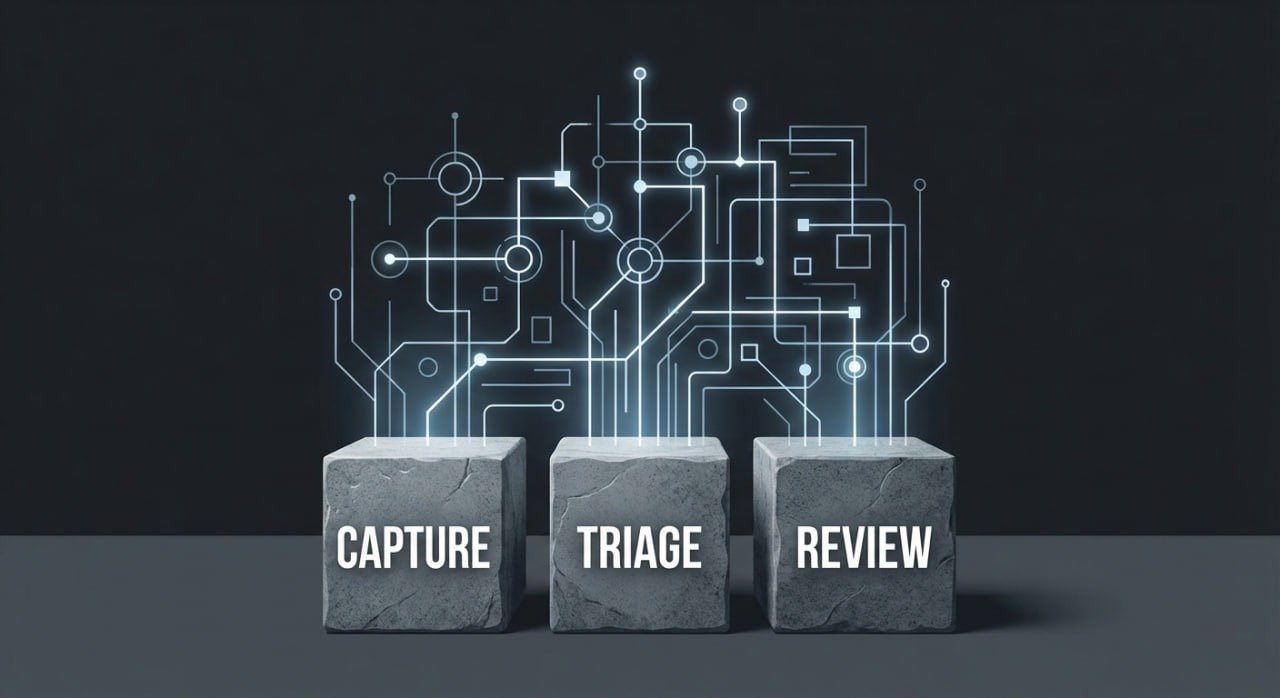
These 3 habits are essential for developing the mindset that creates a functional second brain. You need to start incorporating them into your routine and slowly build them up. After a while, you’ll be surprised by the results.
How to Build a Second Brain in 3 Steps
You don’t need a complicated setup to build a second brain. Start with three repeatable habits:
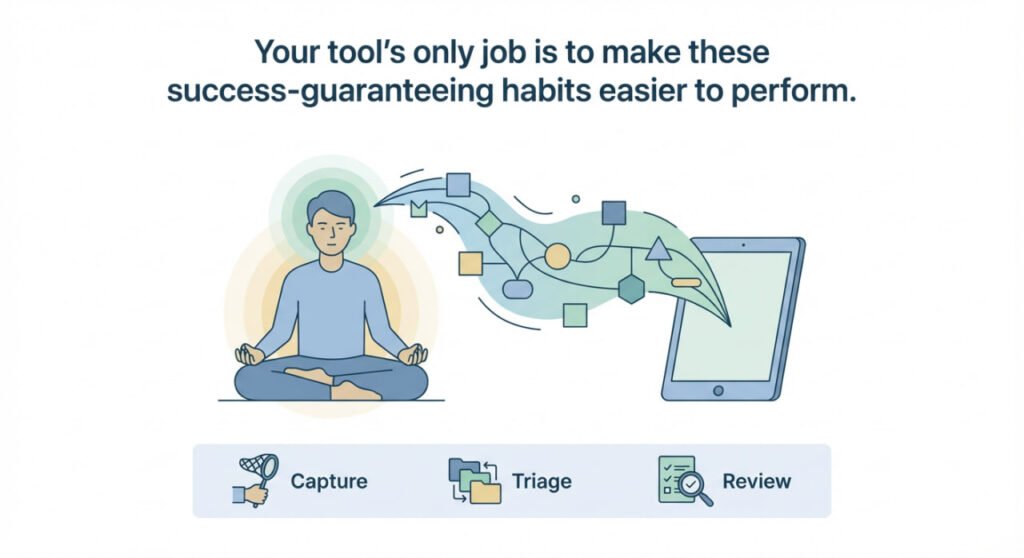
- Capture: Record useful ideas and information before you lose them.
- Triage: Process what you captured and organize only what deserves to stay.
- Review: Revisit your knowledge every week and turn useful notes into action.
Habit 1: Merciless Capture: Capture Ideas Before You Lose Them
Ideally you want something that can be accessed from everywhere and that you can use for all kinds of notes and other post-processing techniques.
Habit 2: Daily Triage: Organize Your Second Brain Every Day
Habit 3: Weekly Review: Turn Notes Into Useful Knowledge
Is a weekly review necessary for a second brain? Yes. It is the heartbeat of the entire system. It’s where you turn stored information into active knowledge.
We’ve also written a guide on how to connect ideas like a professional knowledge worker. Read more about how to transform Information overload into innovative connections.
What is the Most Important Part of a Second Brain?
After all this, the answer is clear. It’s not the folder structure or the tagging system. The most important part of a second brain is the feedback loop created by your habits—especially the weekly review. It’s the engine that prevents decay and creates insight.
Your tool’s only job is to make these success-guaranteeing habits easier to perform.
The problem is, most note-taking apps are designed like empty warehouses. They give you infinite space but no guidance, making it easy to create a mess and hard to build the right habits.
Build a Second Brain that Can’t Fail
Armed with these habits, you’ll find it way easier to make your second brain work for you.
The tool you are going to choose must cater to these habits. It should:
If you are ready to do it all, sign up for the Brainfo waiting list and experience the next level of AI-enhanced Second Brain.
Frequently Asked Questions
1. What is the most important thing I should focus on?
Focus entirely on “Merciless Capture”: getting ideas out of your head and into a digital inbox immediately. This habit is the foundation of a system that lasts.
2. How much time does maintaining a Second Brain take daily?
Less than five minutes. Treat the daily “triage” like quickly clearing your kitchen counter before bed. This tiny investment prevents digital clutter and saves you hours of searching later.
3. Is the 30-minute Weekly Review really necessary, or can I do it monthly?
Skipping the weekly review is one of the fastest ways for a Second Brain to become a passive archive instead of a working knowledge system. This is where you reconnect with useful ideas, clean up unfinished notes, and turn stored information into something you can actually use.